
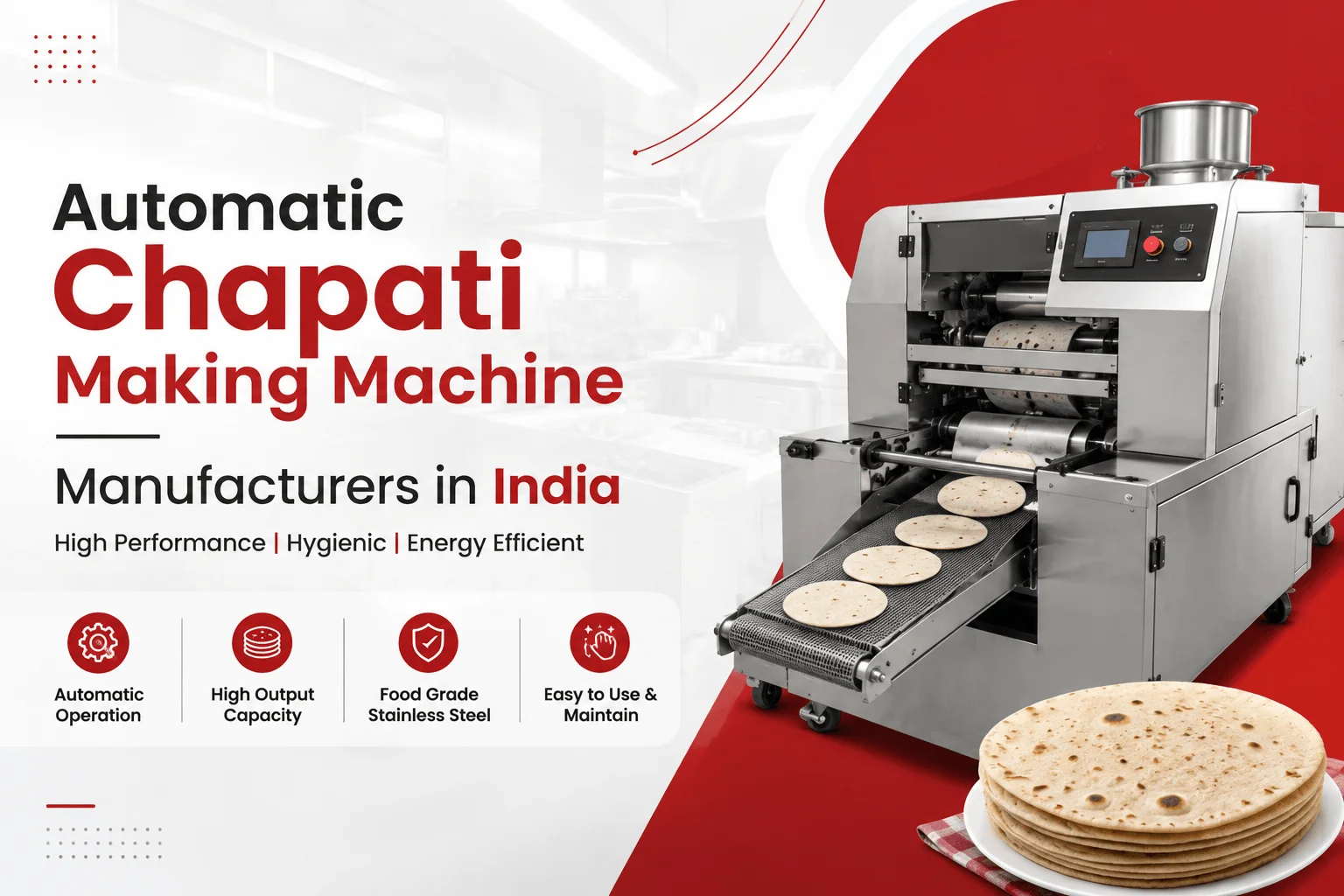
Automatic Chapati Making Machine Manufacturers in India
Time is the biggest factor in commercial kitchen operations. Cooking is not something that can be fast-tracked. Every ingredient needs a certain amount of time and fuel. During peak hours when food orders are at their highest, the kitchen team may get impatient, which is counterproductive for the business. Chapati is consumed daily by millions of guests in commercial kitchens, catering services, and temple feasts. For the managers, serving the customers or guests daily is a hard task. An automatic chapati making machine helps them by bringing automated technology to this routine. For a kitchen where a sizable amount of meals are served per day, having the right machine is a great addition.
Benefits of Chapati Maker for Commercial Kitchens
High Output Capacity
Chapati making machines maintain brilliant efficiency from dough pressing to collection of chapatis. It runs continuously, producing hundreds of chapatis. It helps the chefs to meet high demands without compromising on the quality of rotis.
Uniformly Cooked
Consistency is non-negotiable, and customers notice it first. Uniform thickness, size and puffed rotis are desired in every meal. An automatic chapati making machine maintains uniform rolling and controlled heating in the process. Each roti is evenly cooked for a satisfying dining experience.
Less Labour Effort
While making rotis is easy for professionals, it is time and effort-consuming. Besides the division of dough, rolling and cooking, prolonged cooking develops a lot of heat in the surrounding area, making it more challenging for the workers. On the other hand, heat generated in the machine is emitted safely through the ventilation system. Moreover, it requires minimal effort from the operator.
Faster Kitchen Operations
Through the high output and uniform quality, the machine supports the kitchen staff who need hundreds of rotis in a short time to meet the demands of the guests immediately. The automated cooking eliminates the bottlenecks.
Improved Food Hygiene
Hygiene standards are well maintained when the number of workers involved is less, and the chapatis pass through food-safe surfaces. Stainless steel construction and easy-to-access parts for cleaning ensure hygiene standards.
How Does an Automatic Chapati Maker Work
The process of an automatic chapati making machine is automated, but it is similar to traditional roti making.
Dough Portioning: Freshly prepared dough is fed into the machine, and it is divided into equal portions.
Pressing: Each portion is rolled or flattened into perfectly round chapatis through the pressing method.
Cooking: The flattened dough is passed through the heated conveyor system where it cooks the roti from both sides.
Puffing: When enough steam is developed inside the chapati, it causes the puffing. This is important for the fresh appearance and soft texture.
Collection: The conveyor system finally releases the cooked rotis and transfer it to the collection tray. They are ready to be served or packed.
Factors to Consider Before Buying
Production Ability
First, find out the daily or hourly consumption of chapatis. With the right selection of production capacity, the operations can be conducted efficiently during peak times without any downtime.
Automation Level
Make up your mind whether the kitchen needs a semi-automatic or a fully automatic device. Fully automatic machines require little manual work and should be used by kitchens engaged in continuous high-volume production.
Fuel and Power Source
Commercial chapati machines may work with LPG, PNG, electricity or some combination of these. The machine selected needs to fit into the existing utilities and costs of operating the kitchen.
Cleaning
Cleaning the machine on a daily basis is indispensable in a commercial kitchen. Machines made of food-grade stainless steel and having easily accessible parts make cleaning easier and more effective.
Service and Help
Reliable after-sales service is as important as the machine performance. Be sure to pay attention to such factors as installation, operator training, warranty, spare parts availability and technical support before making your decision.
Conclusion
With the growth of commercial kitchens comes an increased need for smarter and faster food processing. Whether you run a restaurant, a catering business, a hospital kitchen, or an industrial kitchen, the right automatic chapati making machine will help you provide efficient service, lower your expenses, and guarantee that every chapathi served to customers is of the highest quality.
Choose Mega Kitchen as we provide innovative chapati making machines. Our machines are available in a wide range of options.